
Online Gambling In Ireland Enters A New Phase As Regulation And Participation Increase
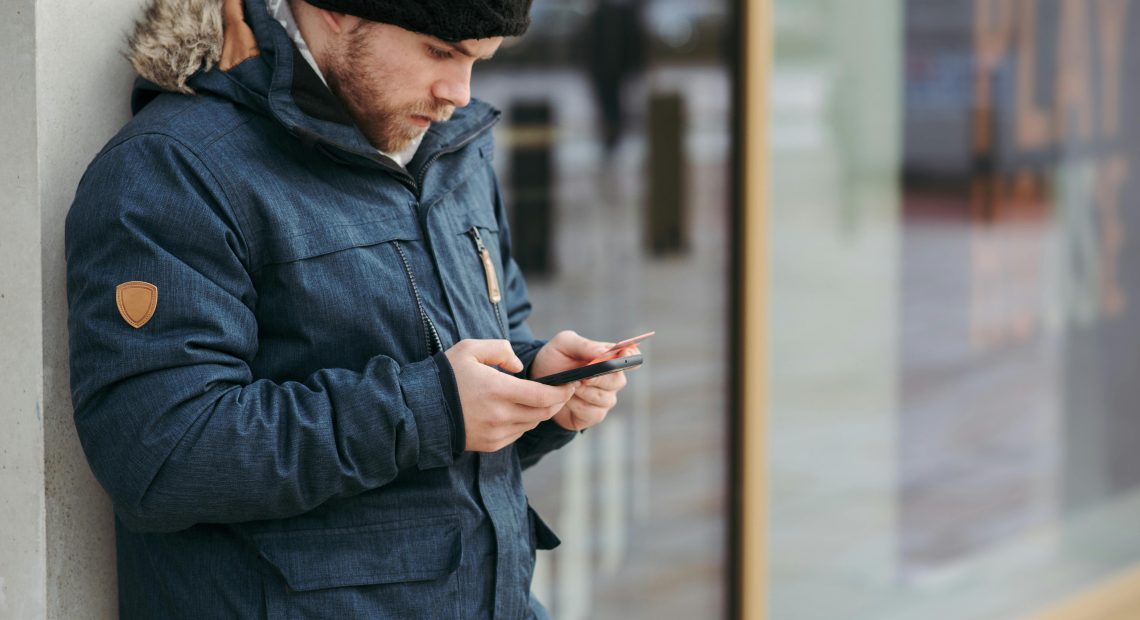
Ireland’s gambling market is entering a more structured era. Stronger licensing rules, clearer consumer protections and rising digital participation mean the sector now sits much closer to the centre of public policy than it did even a year ago.
When you look at online gambling in Ireland versus elsewhere, it’s clear that the status quo has moved beyond loose oversight and into active regulation. But what are the reasons behind that?
Regulation Is Finally Catching Up With The Market
For years, Ireland’s gambling laws looked badly out of step with the way people actually placed bets. Mobile accounts, remote payments and round-the-clock access had moved ahead much faster than the legal framework around them. That gap is now starting to close.
The clearest sign came in February, when the Department of Justice, Home Affairs and Migration confirmed that the Gambling Regulatory Authority of Ireland could begin issuing licences, as confirmed in their press release. The same update set out the next steps too: remote operators move to the new regime from 1 July 2026, while in-person betting operators follow from 1 December 2026. That is a major turning-point because it replaces years of stop-start reform talk with an actual timetable.
It also gives the new framework far more weight than a simple rebranding exercise. The Department of Justice said the Act enables fines of up to €20 million or 10% of turnover, whichever is greater, along with powers aimed at unlicensed operators. It also switches on measures that speak directly to how online gambling now works, including a ban on credit-card payments, the ability for customers to set monetary limits and fresh obligations on operators to protect children online.
Participation Is Becoming More Visible Online
That firmer approach is arriving for a reason. Participation patterns are changing, and they are changing in a more digital direction. Gambling in Ireland has long had a strong retail and racing tradition, but online access is making gambling feel less like an occasional trip and more like something that can sit permanently on your phone.
Research published by ESRI found that online gambling within one Irish cohort rose from 2.9% at age 17 to 9% at age 20, a three-fold increase. The same bulletin found that 3.6% of 20-year-olds reported non-lottery gambling at least weekly, with another 3.6% doing so at least monthly. For a discussion about regulation, those figures are useful because they show participation is growing in a format that is faster, more private and harder to casually monitor.
ESRI also found that young people who were gaming online at 17 were 1.4 times more likely to engage more frequently in online gambling at 20, while those gaming online at 20 were 1.7 times more likely to do so. That does not mean gaming and gambling are the same activity, but it does underline how closely online behaviours can overlap once money, attention and convenience all sit on the same screen.
The New Debate Is About Design As Much As Access
Once gambling shifts online, regulation has to deal with more than whether a site is licensed. It also has to address how platforms are designed, how money is deposited and how users are encouraged to keep going. In that sense, Ireland’s new phase is about the architecture of gambling as much as the existence of gambling.
That is why the details in the new framework are crucial. A credit-card ban transforms how easily losses can be extended. Mandatory tools for setting monetary limits create a clearer pause-point. Protections for children online recognise that digital gambling does not live in isolation from the rest of internet culture. Even the existence of sharper enforcement powers sends a message that the state now sees online gambling as an area that requires active supervision, rather than occasional intervention after the fact.
For operators, that should mean a market with clearer expectations. For customers, it should mean a space where the rules are easier to understand and where accountability has more substance behind it. Ireland is still not trying to remove gambling from adult life. It is trying to bring a fast-moving industry inside a modern, rules-based system.
Local Readers Can See Why This Shift Feels Timely
The local context helps make that broader shift easier to understand. If you’re a regular reader you’ll have already seen warnings about official-looking scam texts designed to draw out personal banking details, which is a reminder that digital money activity always depends on trust, verification and clear consumer safeguards. Gambling is a different sector, but the same basic lesson applies: once financial activity moves smoothly onto your phone, weak guardrails become a bigger problem.
There is also value in remembering that public policy works best when it combines protection with better alternatives. Recent investment in two of the city’s parks, for example, is a reminder of the wider civic aim of giving people more accessible ways to spend time, stay active and use shared public space. That won’t settle every debate around gambling, but it does reflect a healthier instinct in public life: build guardrails, improve choices and make participation in community life easier.
Ireland’s gambling sector is therefore entering a new phase in the fullest sense. Participation is increasing, especially online, while regulation is becoming more specific, more enforceable and more closely tuned to the realities of app-based betting. For you as a reader, that should mean less ambiguity, stronger protections and a public debate that is finally catching up with the way gambling now operates.



Michael's Platt says:
I am open to sharing my experience with Bitcoin investment and losing money to scammers. However, yes, it is possible to recover your stolen bitcoins. I never believed in Bitcoin recovery because I was told it was not possible. However, sometime in October, I fell for a forex scam that promised overly high returns and ended up losing close to $55,000. I searched for a month for help until I finally came across an article on Reddit regarding recovering stolen cryptocurrency, so I reached out to them at (support@boleynonline.com). I was so scared and skeptical because I had heard of bad experiences. Still, I decided to give them a try, and to my great surprise, I recovered all my stolen bitcoins from the scammers within a very short time. And they were able to introduce me to the best and legit BTC investment I am so happy to keep getting my daily BTC. All I do is keep 0.1 BTC in my mining wallet with the help of Boleyn Magic Hackers. They connected me to his mining stream, and I earn
Person conway says:
I struggled for a long time to withdraw my funds and felt completely helpless after multiple failed attempts. No clear responses just frustration.
Everything changed when Cruxcipherteam stepped in. They handled my case professionally, kept me informed, and resolved the issue.
Thanks to them, I was finally able to access my money. I’m truly grateful for their honesty, efficiency, and support.
If you’re facing withdrawal problems, know that help is available.
Email Cruxcipherteam @ proton.me
Telegram @Cruxcipherteam
Barry vossi says:
Stolen Bitcoin? CRUXCIPHERTEAM’s Forensics Experts Can Trace and Recover Your Funds
While investing in bitcoins, be cautious. If your bitcoin gets stolen, it can be a very frustrating time, but instead of getting frustrated, it is important to act fast so that you can get your money back. Unfortunately, many victims do not get their money back because it is very hard to track down the people behind it. The thief is either in another country or using fake identities. But in some cases, it is easy to track the person who has stolen your bitcoin. Tracing bitcoin is not hard for bitcoin forensics or specialists. You can reach out to CRUXCIPHERTEAM at Cruxcipherteam@proton.me or Telegram: @Cruxcipherteam
Barry vossi says:
Why Waiting Costs You More — CRUXCIPHERTEAM Explains How to Recover Stolen Bitcoin
While investing in bitcoins, be cautious. If your bitcoin gets stolen, it can be a very frustrating time, but instead of getting frustrated, it is important to act fast so that you can get your money back. Unfortunately, many victims do not get their money back because it is very hard to track down the people behind it. The thief is either in another country or using fake identities. But in some cases, it is easy to track the person who has stolen your bitcoin. Tracing bitcoin is not hard for bitcoin forensics or specialists. Reach out to CRUXCIPHERTEAM via email: Cruxcipherteam@proton.me or Telegram: @Cruxcipherteam